


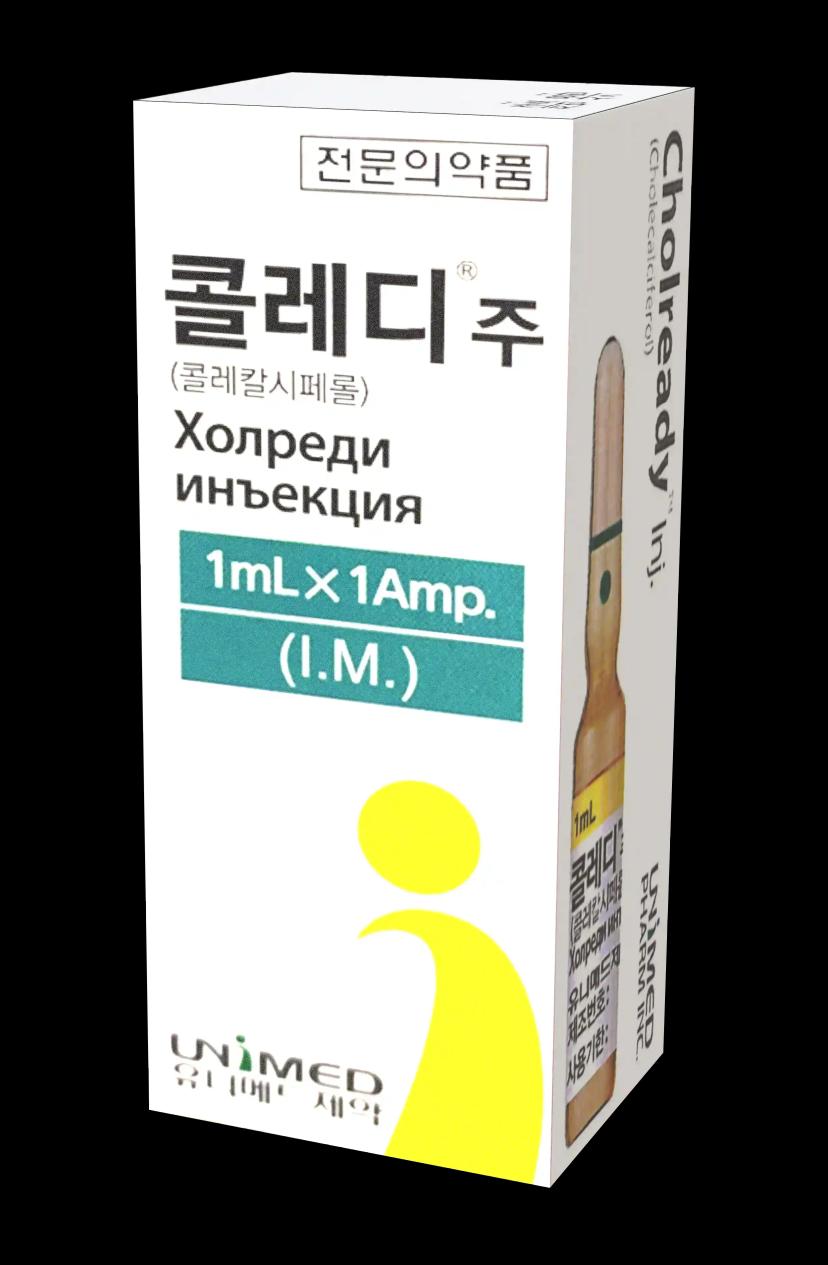
Cholready Solution for injection, 5.0 mg/ml
Product properties
Clear, pale-yellow solution in a brown glass ampoule

Instructions for use
Composition
Active substance: Cholecalciferol
Excipients: Butylhydroxytoluene, Medium-chain triglycerides
Pharmacological properties
Cholecalciferol (vitamin D3) replenishes vitamin D deficiency and regulates calcium-phosphorus metabolism: it increases the intestinal absorption of calcium and phosphates and their reabsorption in the kidneys; promotes bone mineralization and tooth formation, and supports the function of the parathyroid glands and the immune system.
Pharmacokinetics It is well absorbed from the gastrointestinal tract. After absorption, it is transported in the blood as part of chylomicrons; it accumulates predominantly in the liver and is also present in adipose, muscle, skin, and bone tissues. Protein binding: it binds mainly to vitamin D-binding alpha-globulin, as well as to albumin. It is metabolized in the liver by vitamin D 25-hydroxylase to form 25-[OH]D, and then in the kidneys by vitamin D 1-hydroxylase to the active form — 1,25-[OH]2D. Half-life: vitamin D — 19–25 hours in plasma. It is mainly excreted in bile and feces, with a small amount excreted in the urine.
Indications
As part of the complex therapy of the following conditions:
- prevention and treatment of vitamin D deficiency in adolescents over 12 years of age and adults, including elderly patients;
- conditions accompanied by disorders of mineral metabolism (osteoporosis, osteomalacia).
Method of use
Use as prescribed by a physician. The dose should be adjusted according to the blood level of 25-hydroxyvitamin D. After administration, efficacy and tolerability should be assessed over a period of 3 months in adults and 6 months in adolescents; the decision regarding repeat administration should be made based on the assessment results. Due to the increased risk of adverse reactions in case of overdose, the required dose should not be exceeded.
Recommended doses:
- Adults: 200,000 IU intramuscularly as a single dose;
- Adolescents (>12 years): 200,000 IU intramuscularly as a single dose;
- Elderly patients: 100,000 IU intramuscularly as a single dose.
Limitations: The maximum total dose during one year should not exceed 600,000 IU. The intervals between injections should be determined individually (assessment of efficacy and safety after approximately 3 months in adults and approximately 6 months in adolescents). Practical recommendations: before injection, allow the ampoule to reach room temperature; the ampoules are single-dose and should be used immediately after opening. Any remaining solution should not be stored.
Quality improvement suggestions
Name and address of the organization accepting claims (proposals) regarding the quality of medicinal products in the territory of the Republic of Uzbekistan: Unimed Pharmaceutical LLC Bogizagor MFY, 1 Bogizagor Street, Zangiata District, Tashkent Region Tel.: +998 90 830 98 88
Contraindications
The medicinal product is contraindicated:
- in patients with hypersensitivity to the components of the medicinal product;
- in patients with hypercalcemia or hypercalciuria;
- in the presence of calcium stones;
- in patients with a history of nephrolithiasis or a risk of stone formation;
- in patients with renal failure;
- in immobilized patients (long-term bedridden patients);
- in patients with sarcoidosis;
- in patients with pseudohypoparathyroidism;
- during pregnancy and lactation;
- in children under 12 years of age.
Side effects
Clinically significant adverse reactions:
- Headache, weakness, fatigue, myalgia, loss of appetite, weight loss, growth retardation.
- Gastrointestinal: nausea, vomiting, constipation, diarrhea, bloating, abdominal pain, metallic taste, dry mouth.
- Polyuria, polydipsia, dehydration.
- Increased blood pressure, arrhythmia, psychiatric disorders (confusion, mood changes, decreased cognitive function).
- Renal impairment: nephrocalcinosis, calcium stones, renal failure, azotemia.